Our Priorities
The Safeguarding Adults Board has a clear set of priorities that guide our work to help keep adults safe from abuse and neglect. These priorities are informed by what we learn from local people, our partner organisations, safeguarding activity, and national guidance. They help us focus our efforts on the areas where we can make the greatest difference.
We work to a Living Strategy, which supports a flexible and responsive approach to safeguarding. This means our plans are regularly reviewed and updated so we can respond to new challenges, emerging risks and learning. The Living Strategy also demonstrates how partners across our area work together to raise awareness, strengthen safeguarding practice and reinforce the message that safeguarding is everyone’s responsibility.
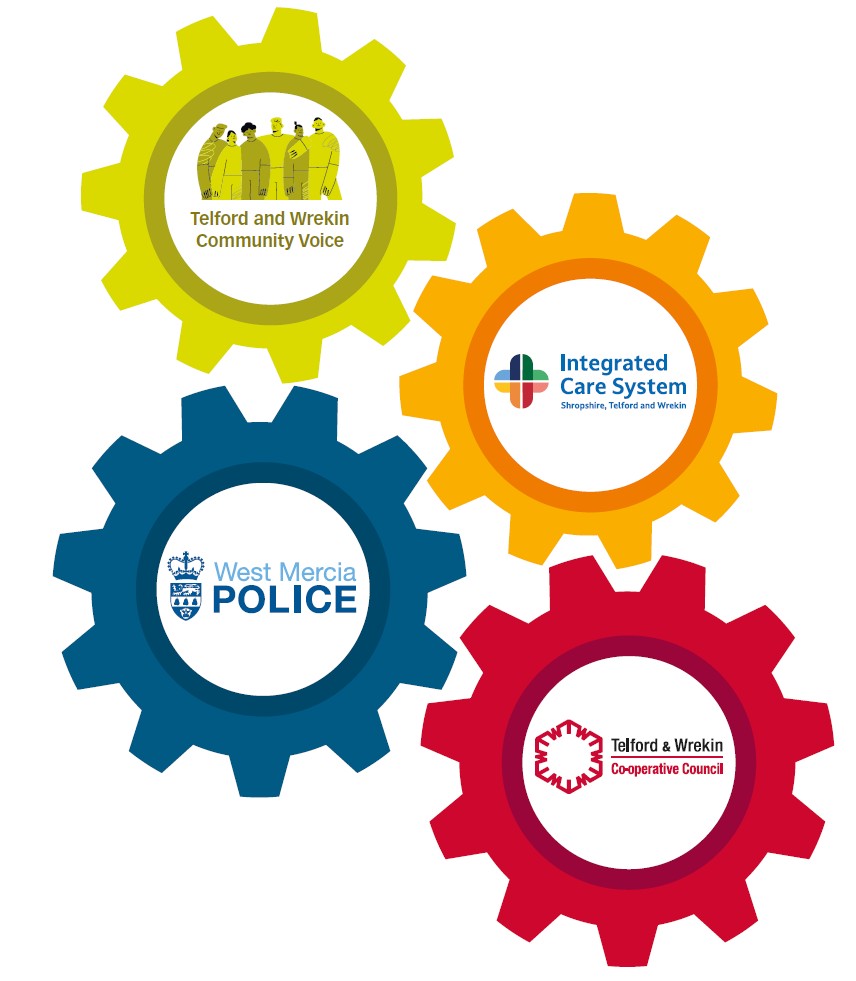
Delivery of our priorities is built on strong partnership working. We could not achieve what we do without the commitment and expertise of our partners, including:
You can find out more about our priorities and how we work with our partners to achieve them by downloading our Living Strategy and Partnership Arrangements documents below.
Working together to keep children, adults and communities safe in Telford and Wrekin
Many of the organisations working to keep people safe in Telford and Wrekin deal with the same or closely linked problems. Because of this, there is a lot of natural overlap between safeguarding boards, community safety boards and their sub‑groups. Issues such as domestic abuse, child exploitation, serious violence and antisocial behaviour often affect whole families and communities, not just individuals.
The Safer Telford and Wrekin Partnership, also known as the Community Safety Partnership (CSP), brings local organisations together to reduce crime, prevent harm and help people feel safe where they live. Its priorities include protecting children from exploitation, reducing domestic abuse, tackling crime and antisocial behaviour, preventing serious youth violence and improving road safety.
The CSP is also responsible for coordinating Domestic Homicide Reviews (DHRs). These are carried out when someone has died as a result of domestic abuse. The aim of a DHR is not to blame individuals or organisations, but to understand what happened and learn lessons to help prevent similar tragedies in the future.
Domestic Homicide Reviews often identify that children and young people have been directly or indirectly affected by domestic abuse, either as victims themselves or as witnesses. Because of this, learning from DHRs is highly relevant to safeguarding children and understanding how services can work better together to protect them earlier.
This is where the work of the Telford and Wrekin Safeguarding Children Partnership Board links closely with the CSP and the SAB. The Safeguarding Children Partnership Board oversees how local organisations work together to keep children and young people safe. It ensures that learning from reviews, serious incidents and local data is used to improve practice, strengthen early help and make sure children’s voices are heard.
By sharing learning and working closely together, the Community Safety Partnership, the Safeguarding Children Partnership Board and other safeguarding groups help make sure that children, families and communities receive the right support at the right time, and that lessons from the most serious cases lead to real and lasting change.
To learn more about community safety priorities, how to raise concerns and view the recent DHR reports, visit Safer Telford:
👉 https://www.safertelford.org.uk/
To find out how local organisations work together to protect children, visit the Safeguarding Children Partnership Board page:
👉 https://www.telfordsafeguardingpartnership.org.uk/children/safeguarding-children-partnership-board/