Domestic Abuse impacting on Children and Young People
At Telford and Wrekin Safeguarding Partnership, we truly value what our young people tell us and as such this page has been created by several young residents to make sure it contains information that is relevant to young people and written in a way that they understand and can relate to.
What is Domestic Abuse?
Domestic abuse is when someone in your family or relationship behaves in a way that hurts, scares, controls or upsets you – it can be a one off serious event such as being hit, or it can happen again and again such as being controlled. Sometimes it happens slowly, and you may feel confused or unsure if what’s happening is really abuse. Domestic abuse comes in many different forms, and none are okay!
If you are seeing domestic abuse at home between your parents you are seen as a victim in your own right.
If something doesn’t feel right, you can get help, you are not alone

Unhealthy Relationship Signs
An unhealthy relationship can show up in lots of ways. It might feel like the other person is controlling you, like telling you who you can talk to, checking your phone, or getting annoyed if you don’t reply straight away, instead of respecting your space and privacy. You might feel scared or worried around them, like you’re constantly trying not to upset them or “walking on eggshells.”
They could put you down by making fun of your looks or personality, making you feel not good enough, or embarrassing you in front of others. Sometimes they might pressure you to do things you don’t want to do, ignore your boundaries, or make you feel guilty for saying no. You might also notice jealousy, like them accusing you of things without reason, getting upset when you spend time with others, or trying to keep you away from friends and family.
There could be lots of arguments that keep happening with no real effort to fix things, or they might blame you for everything. Over time, you might stop feeling like yourself, feel more anxious or stressed, lose confidence, or stop doing things you enjoy.
In an unhealthy relationship, there’s often a lack of respect, where one person has all the control, your opinions aren’t listened to, and decisions aren’t shared. They might also ignore your boundaries by doing things you’ve asked them not to, or not respecting your time and feelings. In more serious cases, it can include abuse, like shouting, making threats, or even physical harm.
All animations on this page can be played without sound, so there is no risk of being overheard if you are worried about someone hearing what you are watching. It shows what domestic abuse can look like between boyfriend and girlfriend and how it can slowly build over time. If you feel this is happening to you, please reach out for help.
Different types of abuse
Hurting how you feel about yourself.
Name-calling, laughing at you
Ignoring you or giving you the “silent treatment”
Making you feel guilty all the time
Playing mind games to control you.
Gaslighting (making you doubt your memory or reality)
Saying things like “you’re imagining it” or “you’re too sensitive”
Making you feel like you’re going crazy
Using physical force.
Hitting, kicking, pushing
Throwing things
Hurting you in any way
Using words to hurt you.
Shouting, swearing
Threats
Constant criticism
Trying to take over your life.
Tracking your location
Controlling your money
Forcing you to do things you don’t want to do
Using technology to control or scare you.
Checking your phone
Sending lots of messages to monitor you
Posting about you to embarrass or threaten you
Any unwanted sexual behaviour or pressure.
Being forced or pressured into sexual activity
Being touched without consent
Sharing private images of you
Secrets and Feelings
Secrets that make you feel sad, scared or confused are not good secrets. Good secrets are fun one’s that make people happy, like planning a surprise birthday party! Your feelings are very important and a good indicated of whether something isn't quite right. Sometimes young people are told:
“It’s just a teenage relationship”
“You’re overreacting - all parents argue and fight sometimes”
“It’s just drama”
But this is not true! You deserve to feel safe in every relationship, and that includes with your parents. Early experiences shape your future relationships and ignoring abuse can allow it to get worse. You know how something feels better than anyone else, if something feels wrong - trust that feeling, you don’t need “proof” to talk about it and you are allowed to ask for help
How to stay safe
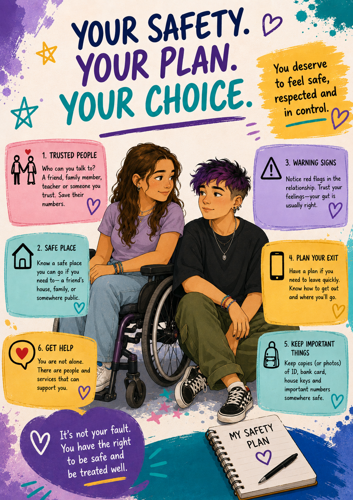
1. Talk to someone you trust
· You don’t have to deal with this alone.
· A trusted adult (parent, teacher, school staff, relative)
· A friend
· A youth worker or counsellor
2. Have a safety plan
· A safety plan is just thinking ahead about what you can do if things feel dangerous.
· Know safe places you can go (a neighbour’s house, a friend’s home)
· Keep important items ready if you need to leave quickly (phone, keys, some money)
· Learn emergency numbers
3. Know how to get help in an emergency
· In the UK, call 999 if you are in immediate danger
· You can also go somewhere safe and ask an adult to call for you
· If you can’t talk, you can still call 999 and press 55 when prompted (this signals you need help)
4. Use technology safely
· Try to keep your phone charged and with you
· Use a password that others don’t know
· If it’s safe, delete messages or search history about help
5. Stay in safer spaces if things get tense
If you sense an argument or danger:
· Move to a room with an exit (door/window)
· Avoid places like the kitchen or bathroom where there are objects that can be used to hurt you
Its not "Just Drama" - Real Stories From People You Know
Sometimes it can feel like pop stars, singers, or people on reality TV live perfect lives where nothing bad ever happens. But that isn’t true. They share their stories to help others understand that abuse can happen to anyone, and that speaking up is brave. Click the boxes below to read about other peoples experiences and what it teaches us:

“It just kept getting worse.” They both described a relationship full of constant arguments, shouting, and things getting out of control. What starts as disagreements can slowly turn into something way more intense and unhealthy. It became a cycle—argue, blow up, repeat. 💡 Real talk: If your relationship feels like constant drama, stress, or fights, that’s not normal—and it’s not healthy.

“I felt trapped.” Mariah Carey has said that at one point in her life, even though she was famous, she basically had no freedom. She’s talked about being controlled, watched, and not allowed to make her own choices. She even said it felt like being a prisoner. 💡 Real talk: You don’t need bruises for something to be abuse. Control = major red flag.

“Home wasn’t always a safe place.” Lewis Hamilton has shared that growing up, there was violence and conflict at home. As a kid, seeing and experiencing that kind of environment can really affect how safe you feel and how you understand relationships. He’s spoken about how it impacted him—but also how he didn’t let it define him. 💡 Real talk: What you grow up around isn’t your fault—and it doesn’t have to be your future.

“That’s not love—that’s control.” Emma Watson talks a lot about what unhealthy relationships actually look like. She calls out stuff people sometimes think is “cute”—like jealousy, checking someone’s phone, or wanting to know where they are all the time. She’s like… no. That’s not love. That’s control. 💡 Real talk: Love should feel safe, not stressful or controlling.
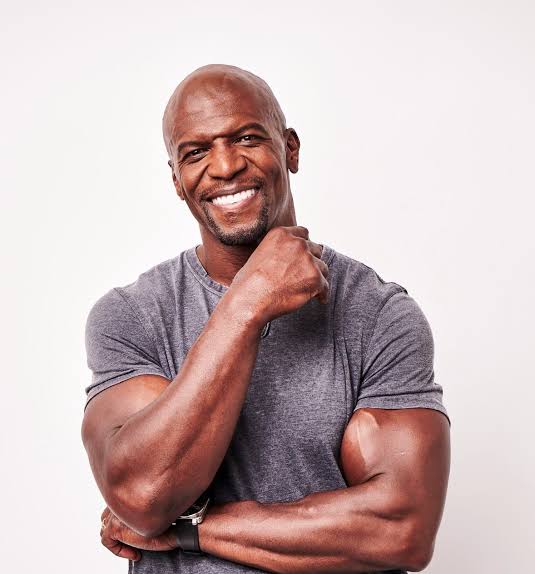
“I stayed quiet for too long.” Terry Crews grew up seeing domestic abuse at home, watching his dad hurt his mum. That stays with you. Later in life, he was sexually assaulted—but didn’t speak out straight away because he thought people wouldn’t take him seriously. Eventually, he did speak up—and it helped others do the same. 💡 Real talk: Abuse can happen to anyone. Speaking up is strong, not weak.

“I didn’t feel like me anymore.” Selena has been open about being in a relationship that messed with her emotionally. She’s talked about feeling confused, hurt, and drained—like she was constantly going up and down. Over time, it affected how she saw herself. She had to step away, focus on herself, and rebuild her confidence. 💡 Real talk: If someone makes you feel bad about yourself again and again, that’s not love.
All of these stories remind us of something very important. Abuse can happen to anyone, no matter their gender, culture, family, or whether they are famous or not. It can happen to children, and it can also be something children see happening to parents, carers, friends, or siblings. Seeing abuse can be frightening and confusing, and children deserve support for that too.
Talking about abuse does not mean you are betraying anyone or doing something wrong. Speaking up is a strong and brave thing to do. Just like famous people found help by telling someone, you can too.
Help and Contacts
If anything you have read feels familiar, or if you are worried about yourself or someone else, talking to someone can really help. There is a whole heap of people who can help:
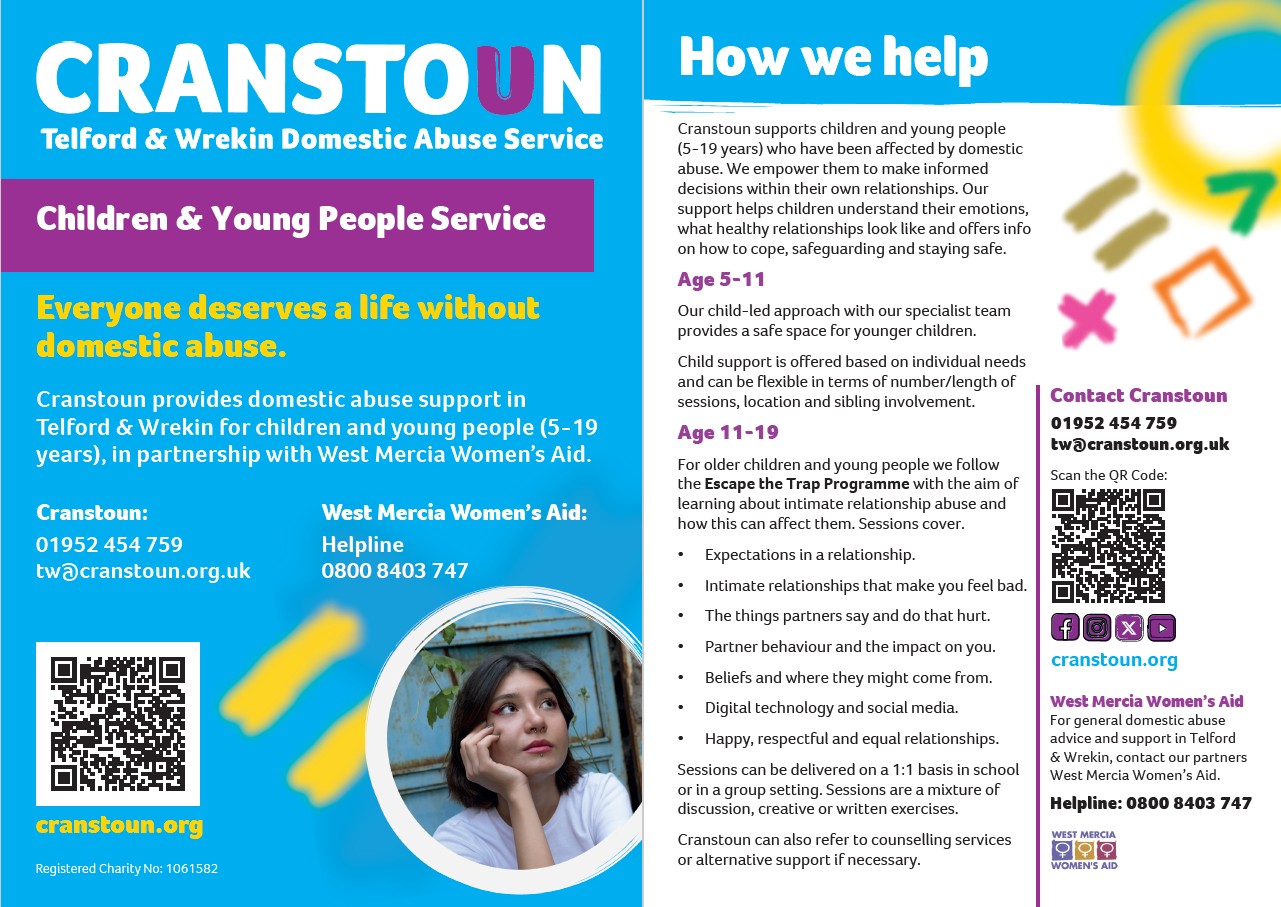
Cranstoun Children and Young People Service - Cranstoun provides domestic abuse support in Telford & Wrekin for children and young people (5-19 years), in partnership with West Mercia Women’s Aid.
You can contact Childline for free on 0800 1111 or chat online with their free service at www.childline.org.uk.
SHOUT - Shout: The UK's free, confidential, 24/7 mental health text service | Shout 85258
If you are worried about something that has happened online, you can get help from the CEOP Safety Centre at CEOP Safety Centre
If you or someone else is in immediate danger, it is important to call 999.
You are not alone, and it’s okay to speak up.